Building an open source license policy doesn't have to take months of committee meetings and legal back-and-forth. With the right approach, software teams can stand up a functional, enforceable policy in days rather than quarters. The reality is that most engineering organizations already use hundreds of open source components, and every one of them carries a license with specific obligations.
AI code license audit tools have made it far easier to identify what's in your codebase, but those tools only deliver value when there's a clear policy governing which licenses are acceptable and which ones require review. Without that policy, audit results become noise.
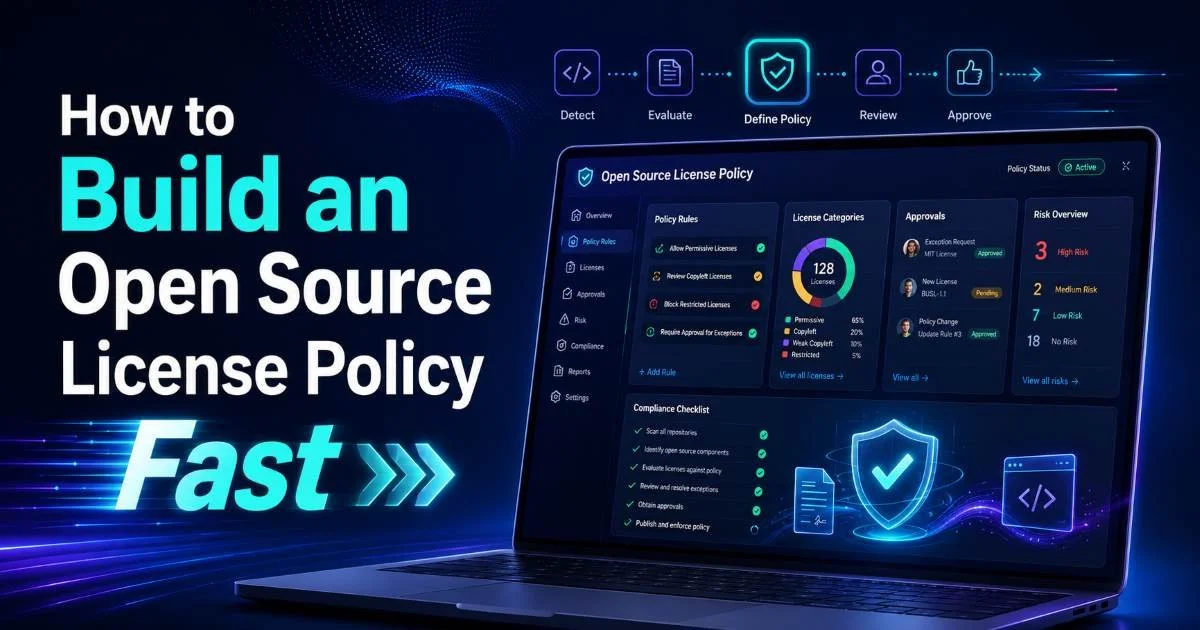
This guide walks you through four concrete steps to build a license policy fast, giving your team a framework that scales as your software grows. Whether you're a solo developer shipping a SaaS product or an engineering lead managing dozens of repositories, this process works.
Key Takeaways
- A license policy should classify licenses into approved, restricted, and banned categories.
- Automated license checker tools catch risks that manual reviews consistently miss.
- Copyleft licenses like GPL carry the highest compliance obligations for commercial software.
- Your policy needs a documented exception process to avoid bottlenecking developers.
- Regular audits keep your policy aligned with your actual dependency tree.
Step 1: Inventory Your Dependencies and Their Licenses
Before you can write any policy, you need to know what you're working with. Run a full dependency scan across every repository your team maintains. This means direct dependencies and transitive ones, because a single npm package can pull in dozens of sub-dependencies, each with its own license. Most developers are surprised to find that their project with 20 declared dependencies actually relies on 200 or more packages when the full tree is resolved.
Start by generating a Software Bill of Materials (SBOM) for each project. Tools like SPDX-compatible scanners and top code audit tools for license risk detection can automate this process. The SBOM should list every component, its version, and its declared license. Pay special attention to components that declare multiple licenses or use custom license text, as these often require human review. At the end of this step, you should have a spreadsheet or database listing every dependency and its license identifier.
Export your SBOM in SPDX or CycloneDX format so it stays compatible with most compliance tools.
Why Manual Tracking Fails
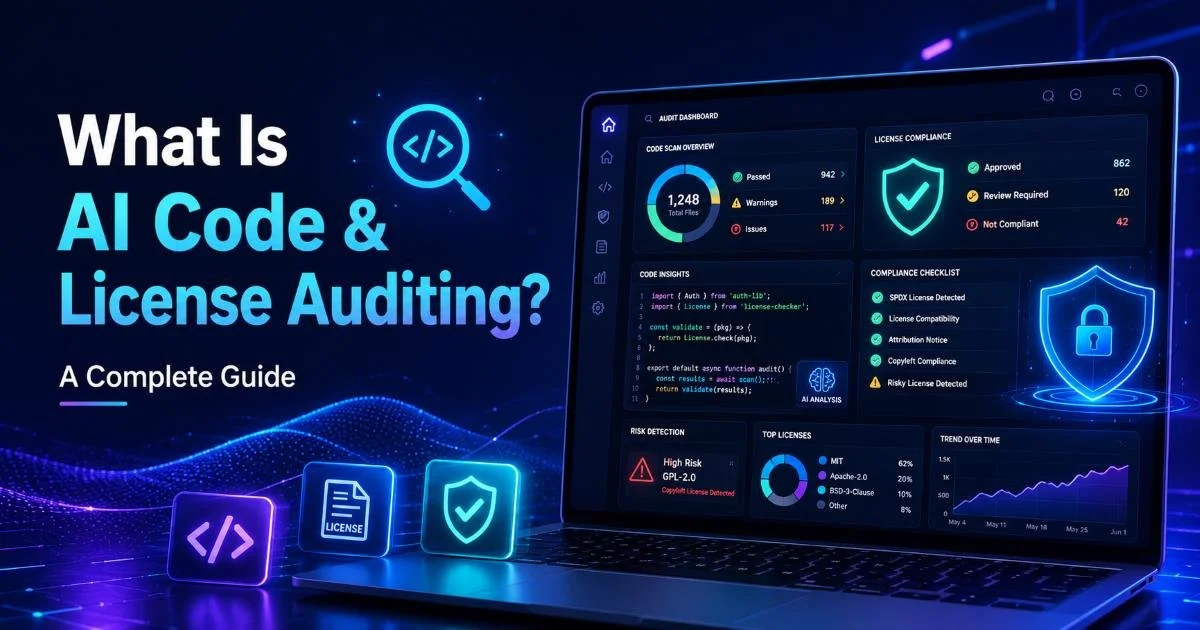
Some teams try to maintain license inventories in shared documents or wikis. This approach breaks down quickly because dependency trees change with every pull request. A developer adds a new utility library on Tuesday, and by Wednesday your inventory is outdated. Modern AI code and license auditing workflows solve this by scanning continuously and flagging new dependencies as they enter the codebase. The goal is a living inventory, not a static snapshot.
Check for "license drift" in your transitive dependencies as well. A package you approved at version 2.0 under the MIT license might switch to a more restrictive license at version 3.0. Your inventory needs to capture not just what license a package uses today, but alert you when that changes. At the end of this step, you should have a complete, exportable list of every open source component and its license across all your repositories.
Step 2: Classify Licenses by Risk Level
With your inventory complete, the next step is sorting every license you've encountered into risk categories. Most organizations use a three-tier system: approved, restricted, and banned. Approved licenses (like MIT, BSD 2-Clause, and Apache 2.0) can be used freely without additional review. Restricted licenses require case-by-case evaluation, and banned licenses cannot be used under any circumstances without executive-level approval.
License Risk Tiers
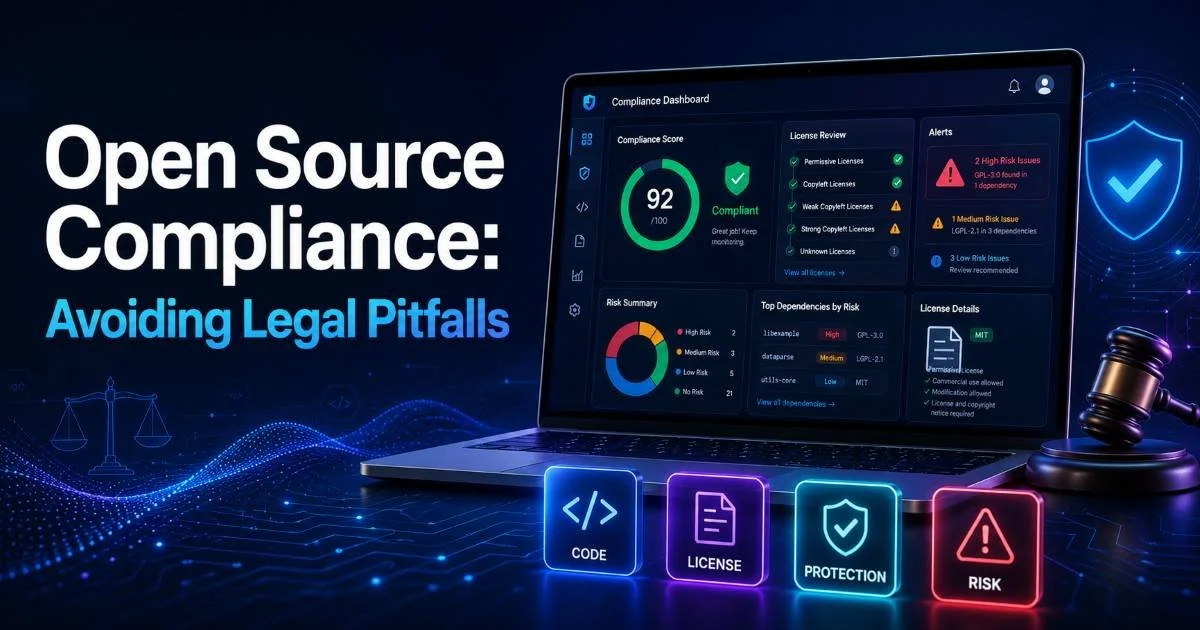
The classification depends heavily on your business model. If you distribute software to customers (on-premises installations, desktop apps, embedded systems), copyleft licenses like GPL pose significant risk because they may require you to release your source code. If you only run software as a hosted service, some copyleft licenses are less dangerous, though AGPL was specifically written to close that loophole. Understanding open source compliance and how to avoid legal pitfalls will help you draw these lines correctly for your specific situation.
Never assume a permissive-sounding license name means permissive terms. Always read the actual license text.
Don't forget about dual-licensed components. Some popular projects (like MySQL and Qt) offer both an open source license and a commercial license. Your policy should specify how to handle these. In most cases, if a component offers a commercial license option, that's the safer path for proprietary software. At the end of this step, you should have a reference document mapping every license you've encountered to one of your three risk tiers, with a clear rationale for each classification.
"A license policy without risk tiers is just a wish list. Classification is what turns awareness into action."
Step 3: Define Your Policy Rules and Exception Process
Now you have your inventory and your classifications. It's time to write the actual policy document. Keep it short: the best license policies fit on two pages. Developers won't read a 30-page legal document, and they shouldn't have to. Your policy should answer three questions clearly. What licenses can I use without asking? What licenses need approval? And what licenses are off-limits? If a developer can answer those questions in under a minute, your policy is well-designed.
Structure the policy around clear rules rather than guidelines. "MIT-licensed components are approved for all projects" is a rule. "Developers should consider the implications of copyleft licenses" is a guideline, and guidelines get ignored under deadline pressure. Each rule should include who it applies to (all developers, specific teams, contractors), what triggers it (adding a new dependency, upgrading a major version), and what happens if it's violated (build fails, PR blocked, security review triggered).
Store your license policy in your repository root as LICENSE-POLICY.md so it's always one click away from your code.
Exception Handling
Every policy needs an escape valve. Sometimes a restricted or banned library is genuinely the best option, and the business risk is manageable with the right precautions. Your exception process should require the requesting developer to document why no alternative exists, what specific license obligations apply, and how those obligations will be met. Route exception requests through a lightweight review (engineering lead plus legal, not a full committee) with a target turnaround of 48 hours. Slow exception processes cause developers to work around the policy, which is worse than having no policy at all.
Document every approved exception in a central registry. This prevents the same debate from happening twice and creates a record that's invaluable during due diligence if your company ever faces an acquisition or investment round. Tools like software license checkers that detect hidden risks can flag when an exception-approved component introduces new transitive dependencies that weren't part of the original review. At the end of this step, you should have a written policy document, a defined exception process with clear owners and SLAs, and a registry for tracking approved exceptions.
Review your exception registry quarterly. Components that were exceptions a year ago might now have permissively licensed alternatives.
Step 4: Automate Enforcement in Your CI/CD Pipeline
A policy that lives only in a document is a policy that gets violated daily. The real power comes from wiring your license policy into your build pipeline so that violations are caught automatically before code reaches production. This is where source compliance shifts from a periodic audit exercise to a continuous practice. Most modern CI/CD systems support license scanning as a build step, and the integration typically takes less than an hour to configure.
Configure your pipeline to check every new or updated dependency against your approved license list. If a dependency carries a banned license, the build should fail with a clear error message that points the developer to the exception process. For restricted licenses, the build can pass but should generate a warning and automatically create a review ticket. This approach keeps developers moving while maintaining visibility. The key is making compliance feedback as fast and specific as a failing unit test.
Choosing the Right Tools
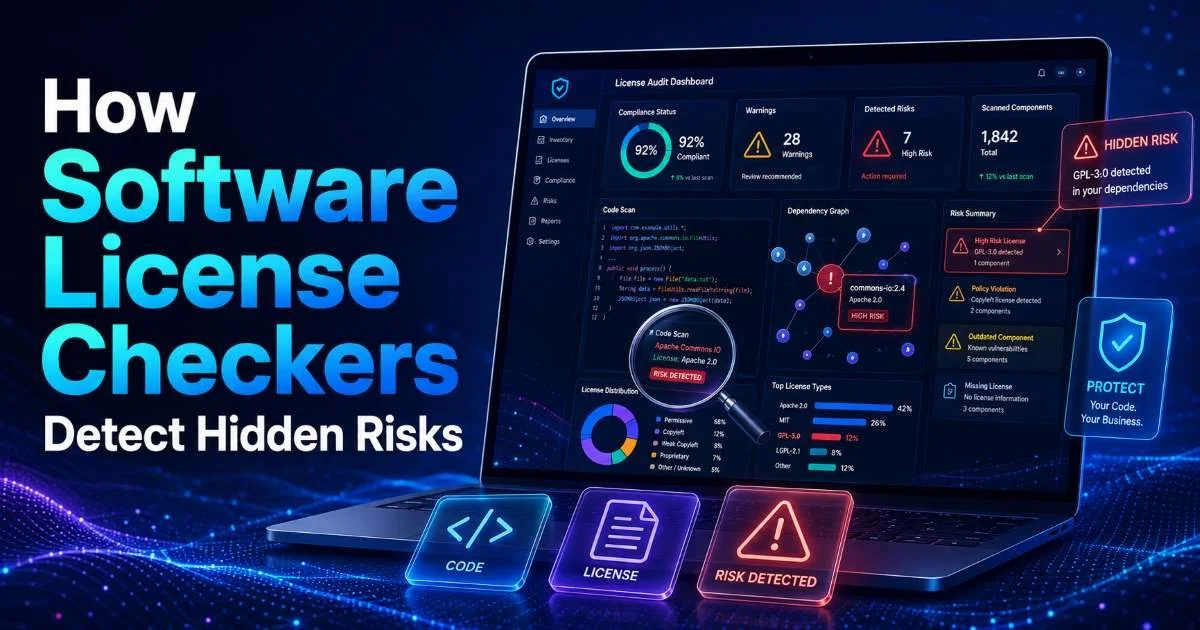
Several open source and commercial tools can handle automated license enforcement. FOSSology, ScanCode, and FOSSA are popular choices, each with different strengths. If your team uses AI-powered development workflows, consider how those tools integrate with platforms like MCP servers for coding to maintain compliance even when AI generates or suggests code that introduces new dependencies. The tool matters less than the integration; pick one that fits your existing stack and actually wire it in.
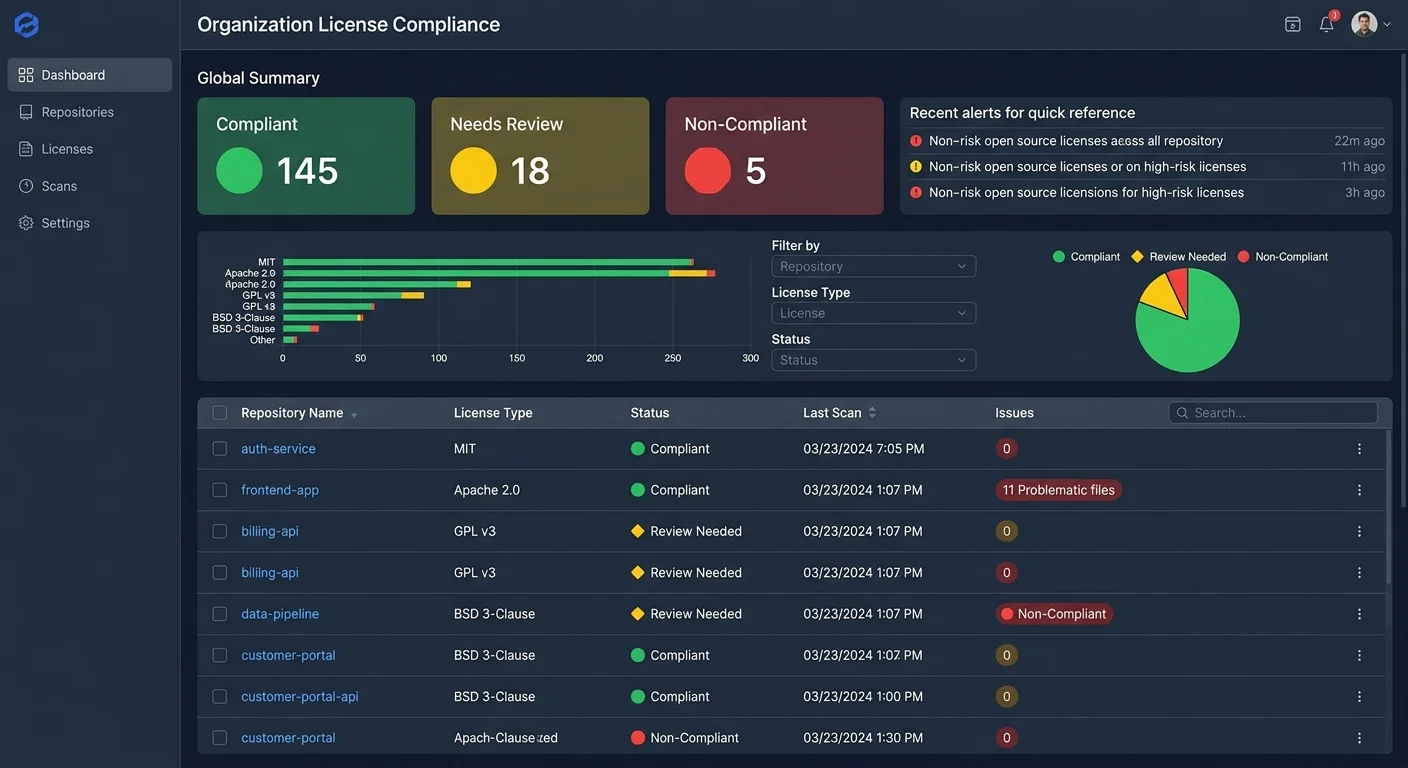
Set up a dashboard that shows license compliance status across all your repositories. Engineering leads need a single view that answers: "Are we clean?" This dashboard should track the total number of dependencies, the breakdown by license tier, any pending exceptions, and components with unknown or unclassified licenses.
Schedule a monthly review where your team spends 30 minutes looking at the dashboard and addressing any drift. At the end of this step, you should have automated license checks running in CI/CD, a dashboard showing compliance status, and a recurring review cadence on the calendar.
Start enforcement in warning-only mode for the first two weeks to avoid blocking active development while you clean up existing violations.
Frequently Asked Questions
?How do I generate an SBOM that works with most license audit tools?
?Is an AI code license audit tool enough without a written policy?
?How long does it realistically take to build a functional license policy?
?What's the biggest mistake teams make when tracking open source licenses?
Final Thoughts
Building an open source license policy doesn't require perfection on day one. It requires a clear inventory, a sensible classification system, written rules with an exception process, and automated enforcement. Start with the basics, enforce them consistently, and refine as you learn.
The teams that struggle with compliance aren't the ones with imperfect policies; they're the ones with no policy at all. Get something in place this week, automate it next week, and improve it every quarter.