AI code audit tools and manual code audits represent two fundamentally different approaches to software license compliance and risk detection. For engineering teams managing dozens or even hundreds of open source dependencies, choosing the wrong approach can mean missed license conflicts, legal exposure, or wasted developer hours. Manual audits have been the standard for decades, relying on human expertise to review codebases line by line.
But AI-powered software license checker solutions are reshaping how teams identify risks, flag incompatible licenses, and maintain compliance at scale. As your codebase grows, understanding what AI code and license auditing actually involves becomes essential to making an informed decision. This article compares both approaches across the dimensions that matter most to developers and engineering leads.
Key Takeaways
- AI audits process thousands of dependencies in minutes; manual reviews take days or weeks.
- Manual audits offer deeper contextual judgment for ambiguous licensing edge cases.
- AI-based license risk detection scales linearly with codebase growth without added headcount.
- Combining both methods produces the most reliable compliance outcomes for complex projects.
- Engineering teams should match their audit approach to project size, risk tolerance, and release cadence.
Speed and Scalability
Throughput Comparison
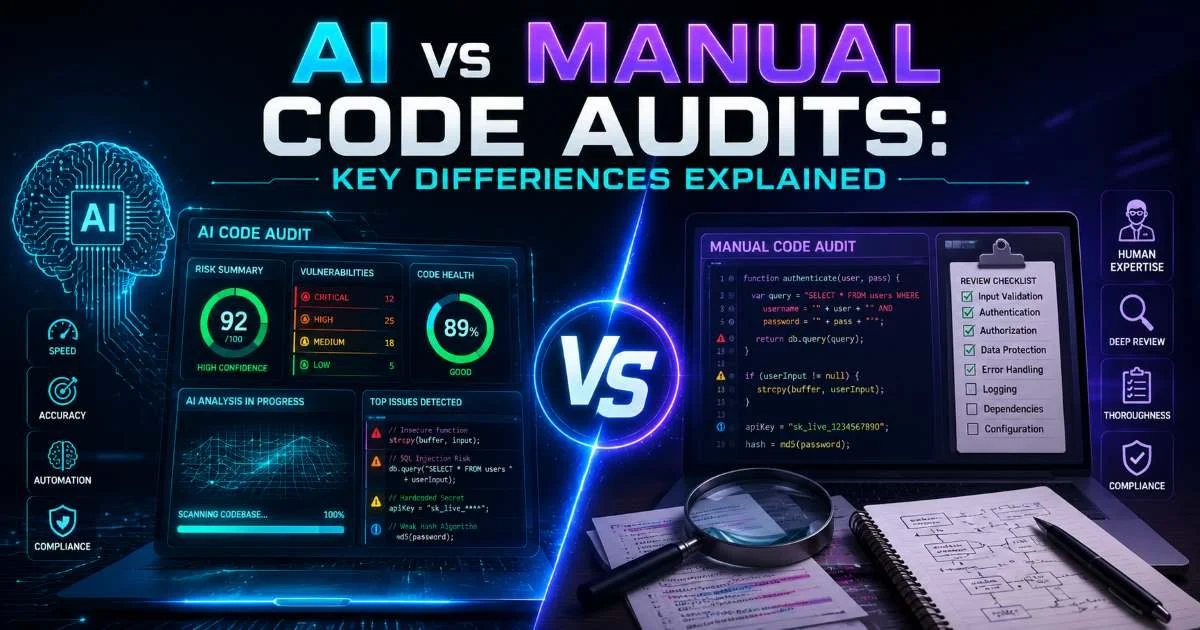
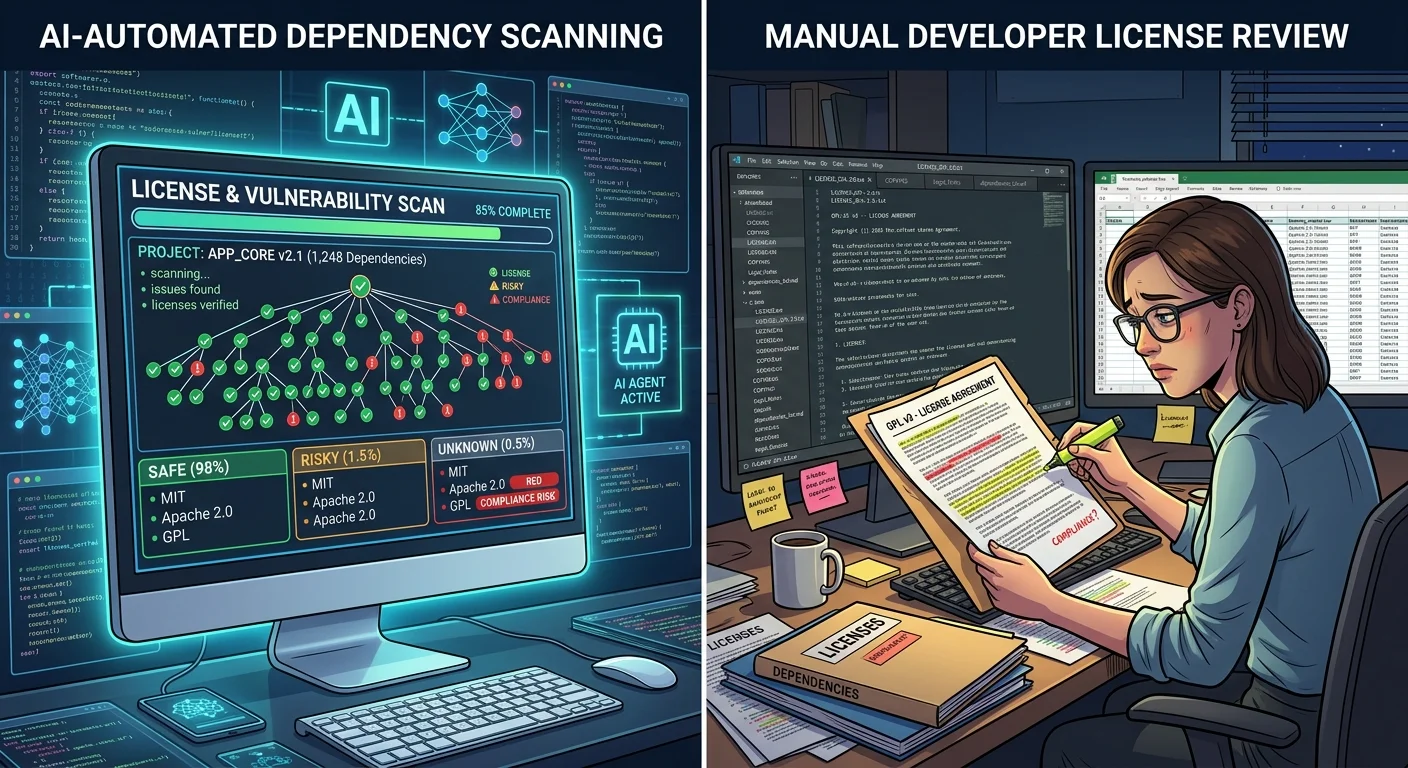
The most obvious difference between AI and manual code audits is raw speed. A modern AI-powered audit tool can scan an entire repository, parse dependency trees, and cross-reference license databases in minutes. Manual audits, by contrast, require a developer or legal analyst to open each dependency, read its license file, verify compatibility, and document findings. For a project with 200 dependencies, that manual process can consume 40 to 80 hours of skilled labor.
Speed matters beyond convenience. Teams shipping weekly or biweekly releases cannot afford a multi-day audit bottleneck before each deployment. AI tools integrate into CI/CD pipelines, running license checks on every pull request without blocking the development workflow. Manual reviews, no matter how thorough, create a sequential dependency that slows release velocity. This alone makes AI attractive for teams with aggressive shipping schedules.
Scaling with Project Growth
As projects grow, manual effort scales linearly (or worse) with the number of components. Adding a new microservice or migrating to a monorepo means more dependencies to track. AI tools handle this expansion without additional headcount. You configure the tool once, and it adapts to whatever the dependency graph throws at it. For organizations managing multiple products, this difference compounds quickly.
Integrate AI license scanning into your CI pipeline so every new dependency gets checked automatically before merge.
Manual processes also suffer from institutional knowledge loss. When the developer who performed the last audit leaves the team, their notes and context often leave with them. AI audit tools maintain a persistent, queryable record of every scan, every flagged license, and every resolution. That continuity is hard to replicate with spreadsheets and shared documents. Exploring the top code audit tools for license risk detection can help you evaluate which platforms offer the best pipeline integration.
Accuracy and Depth of Analysis
Pattern Matching vs. Human Judgment
AI audit tools excel at pattern recognition. They compare license text against known templates (SPDX identifiers, for example), detect snippets of copyleft code in permissively licensed projects, and flag known problematic combinations. This works well for the 90% of cases that follow standard patterns. Where AI struggles is the remaining 10%: custom license clauses, dual-licensing ambiguity, or code with no license file at all.
"AI catches the 90% of standard cases fast, but human judgment remains irreplaceable for the ambiguous 10%."
Manual audits bring contextual reasoning that no current AI fully replicates. A seasoned open source compliance analyst can evaluate the intent behind a custom license clause, assess whether a dependency's usage pattern triggers copyleft obligations, or determine if a snippet qualifies as fair use. These judgment calls require understanding not just the license text but the broader legal and business context. For high-stakes projects (think medical devices, financial platforms, or government contracts), that depth matters.
False Positives and Negatives
Every audit method produces errors. AI tools tend toward false positives, flagging files that contain license-like text but are not actual license declarations, or misidentifying a modified BSD clause. False positives waste developer time but are generally safe. Manual audits, conducted under time pressure, are more prone to false negatives, missing a deeply nested dependency with a restrictive license. Both error types carry costs, but false negatives carry legal risk.
Relying solely on manual audits for large dependency trees significantly increases the chance of missing copyleft obligations buried in transitive dependencies.
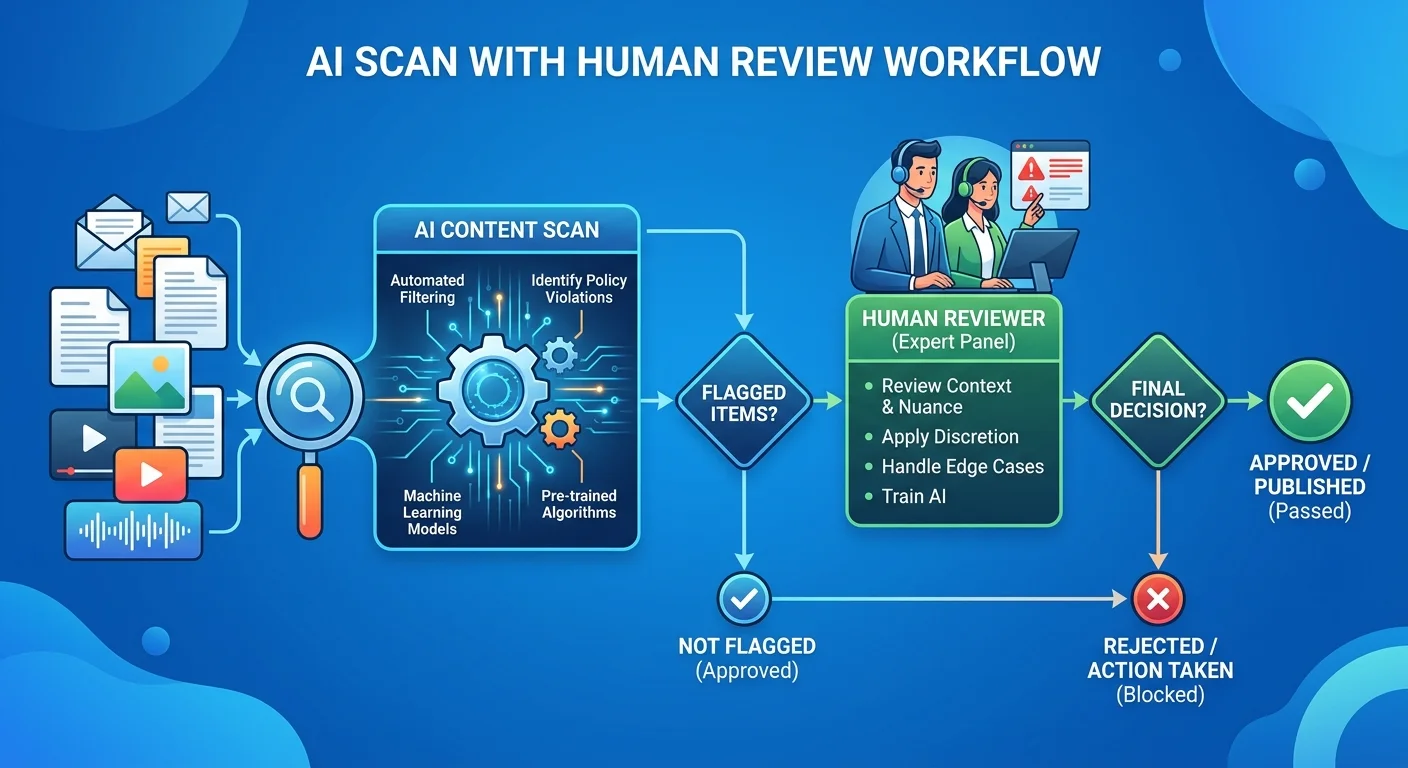
The best AI-based code audit tools now report confidence scores alongside their findings, letting reviewers prioritize which flags deserve manual investigation. This approach transforms the AI from a final arbiter into an intelligent triage system. Instead of reviewing 500 dependencies, your compliance analyst reviews only the 30 that the AI found ambiguous. That is a much better use of scarce expertise, and it directly reduces the risk of both false positives and false negatives reaching production.
Cost and Resource Requirements
Direct Costs
AI audit tools carry subscription or licensing fees that range from free (for basic open source scanners) to several thousand dollars per year for enterprise platforms. These costs are predictable and scale with usage tiers rather than project complexity. Manual audits, however, cost developer or consultant time. At an average loaded rate of $150 per hour for a senior engineer, a 60-hour manual audit runs $9,000 per engagement. For teams auditing quarterly, that adds up to $36,000 annually on a single product.
External legal review adds another layer. When manual audits surface ambiguous findings, organizations often engage intellectual property attorneys at $300 to $600 per hour. AI tools that pre-classify findings and provide license compatibility matrices can reduce (though not eliminate) the need for legal consultation. Understanding open source compliance and how to avoid legal pitfalls helps teams decide where legal spend delivers the most value.
Opportunity Costs
The hidden cost of manual audits is opportunity cost. Every hour a senior developer spends reading license files is an hour not spent building features, fixing bugs, or mentoring junior engineers. For small teams, this trade-off is especially painful. AI tools reclaim that time by automating the repetitive scanning work and surfacing only actionable findings. The developer's role shifts from auditor to decision-maker, which is a far better use of their skills.
Teams also need to consider ramp-up time. A new engineer can start using an AI audit tool after a brief onboarding session. Building the expertise to conduct thorough manual license reviews takes months or years of practice, familiarity with license families, and understanding of case law. Building an open source license policy fast becomes significantly easier when AI tools handle the initial scanning and categorization, freeing your team to focus on policy decisions rather than data gathering.
Free and open source scanning tools exist but often lack the depth of license detection, SBOM generation, and policy enforcement that paid platforms provide.
Best-Fit Scenarios and Hybrid Approaches
When Manual Audits Still Win
Manual audits remain the right choice in specific situations. Pre-acquisition due diligence, where a company is evaluating another company's entire IP portfolio, demands the nuance that only experienced analysts provide. Similarly, projects with heavy proprietary and open source code mixing (especially in regulated industries) benefit from human reviewers who understand both the technical and legal context. If your project has fewer than 20 dependencies and ships annually, the overhead of setting up an AI tool may not be justified.
Another scenario where manual review excels is when dealing with code of uncertain provenance. AI tools compare against known license databases, but code that was copied without attribution, modified from a licensed original, or generated by tools like AI companion applications may not match any known pattern. A skilled reviewer can trace code origins, evaluate similarity, and make judgment calls that current AI cannot.
The Hybrid Model
The strongest approach for most engineering teams is a hybrid model. AI handles the initial scan, classifying dependencies, flagging known risks, and generating a software bill of materials. Human reviewers then focus their attention on the flagged items, ambiguous cases, and high-risk components. This division of labor maximizes both speed and accuracy while keeping costs manageable. It is the approach adopted by most mature open source program offices.
To implement a hybrid workflow, start by selecting an AI tool that integrates with your existing build system and supports your primary package ecosystems. Run it on every commit or pull request. Configure your policy rules (which licenses to allow, which to block, which to flag for review).
Then assign a rotating team member to review flagged items weekly. This cadence keeps compliance current without burning out any single person. Over time, you refine the policy rules based on what the human reviewer approves or rejects, creating a feedback loop that makes the AI smarter for your specific context.
Review and update your AI tool's license policy rules quarterly to reflect new dependencies, legal guidance, and organizational risk tolerance.
Frequently Asked Questions
?How do I add AI license scanning to my CI/CD pipeline?
?Can AI catch ambiguous license conflicts that need legal judgment?
?How many developer hours does a manual audit take for 200 dependencies?
?Does switching to AI audits mean you can drop manual reviews entirely?
Final Thoughts
Neither AI nor manual code audits are universally superior. AI brings speed, consistency, and scalability that manual processes simply cannot match for growing codebases. Manual audits deliver the contextual judgment and nuanced analysis required for edge cases and high-stakes decisions.
The practical answer for most software teams is to combine both: let AI handle the volume and surface the risks, then apply human expertise where it counts most. Choose your approach based on your project's size, release cadence, risk profile, and available expertise, and revisit that choice as your product evolves.
Disclaimer: Portions of this content may have been generated using AI tools to enhance clarity and brevity. While reviewed by a human, independent verification is encouraged.